Does a New York Water Quality Report Describe Your Own Kitchen Tap?
A New York water quality report can tell you a lot about the public water system serving your area, but it may not show what came out of your kitchen faucet. The difference matters when you have a concern about taste, plumbing or a particular contaminant. Here’s how to read the report, understand its limits and decide what to ask next.
What a New York water quality report describes
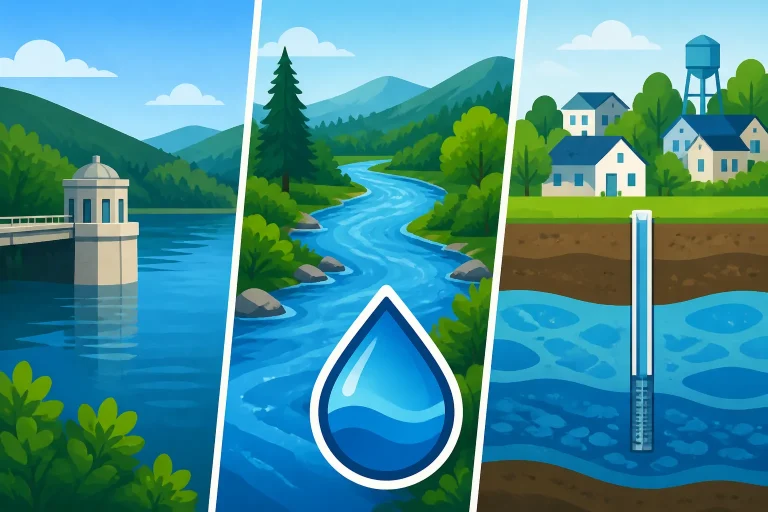
A public-system annual report is a summary of the water supplied by a system, not necessarily a test of the water at your home’s kitchen tap. According to the New York State Department of Health, these reports describe where your water comes from, what treatments are provided, contaminant results and any violations. The report may be useful for understanding the system as a whole, but it does not automatically answer a household-specific question.
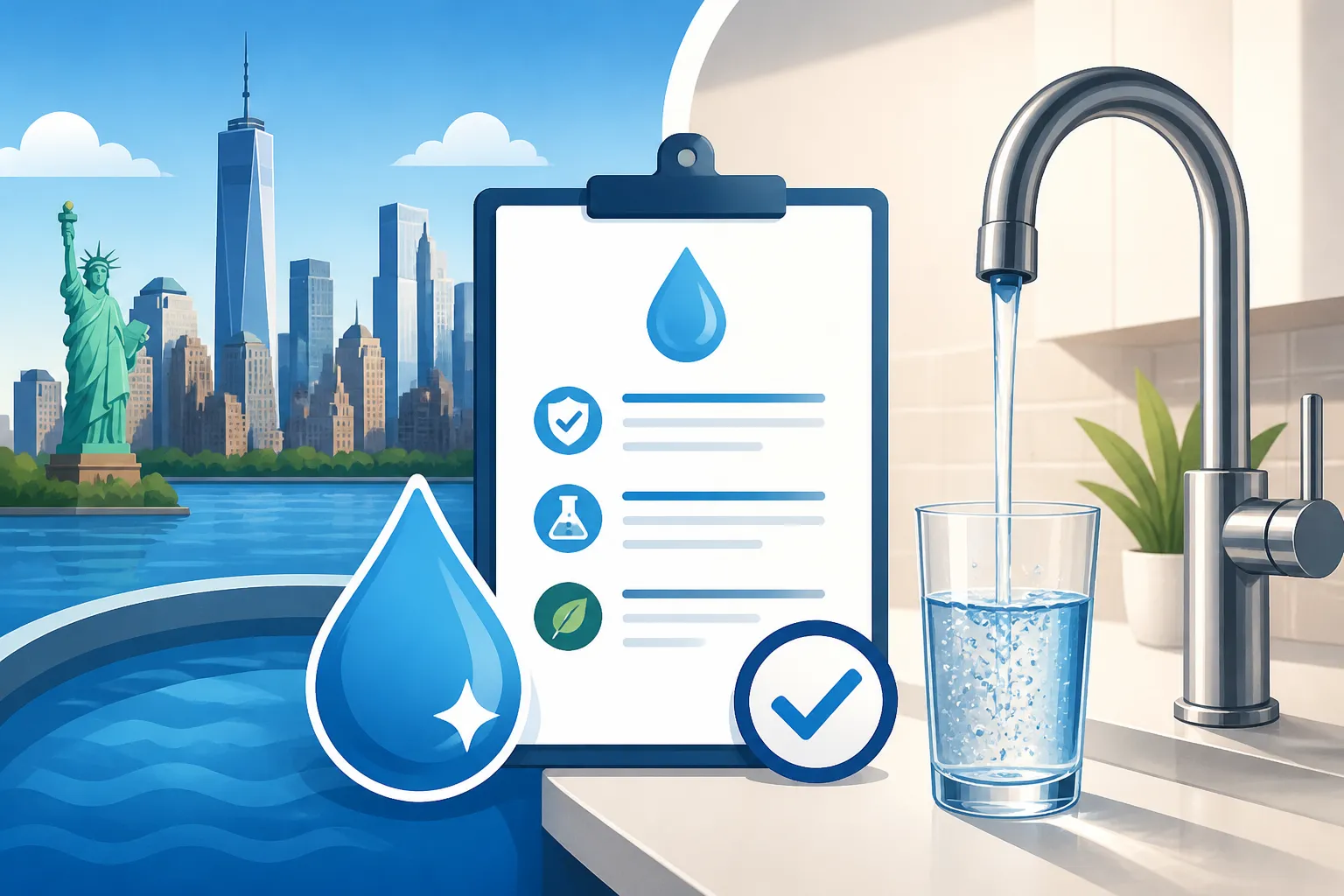
Public water systems must issue annual water quality reports and notify consumers when state or federal drinking water standards have been violated, according to the New York State Department of Health. Those reports are often called annual drinking water quality reports or consumer confidence reports. The report’s purpose is to share information about the public system and its results; it is not a promise that every building’s tap has been sampled.
That distinction is easy to miss. The water supplier may collect samples at locations chosen for system monitoring, or use results that describe treated water before it reaches a particular building. A report can therefore help explain the water supplied to your area without capturing what happens inside your property’s plumbing.
For a household-specific result, New York State Department of Health guidance says specific results must be requested from the supplier. If you want to ask whether your tap can be tested, contact your water supplier using the information on your water bill, or contact your local health department. The state guidance reviewed here doesn’t specify a single home-testing procedure, so ask what type of test is available, what it covers and how the sample should be collected.
If you are still figuring out which company or authority serves your address, start with Finding Your New York Water Supplier and Whether It Adds Fluoride. The supplier listed on a bill is a practical starting point; if the bill is unavailable or unclear, the local health department may help you identify the right contact.
The system and the home are different sampling points
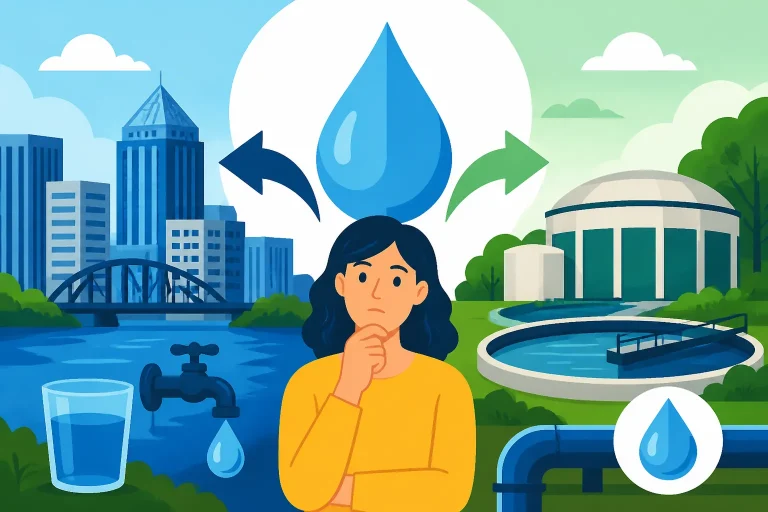
Think of the report as a view of the public water system, while a tap test is a view of water collected at a particular fixture under specified conditions. They answer different questions.
A supplier’s report can help you understand the source, treatment and reported monitoring results for the system. A sample from your kitchen tap can help address a question about that tap at the time it was collected. Neither result should automatically be treated as a substitute for the other.
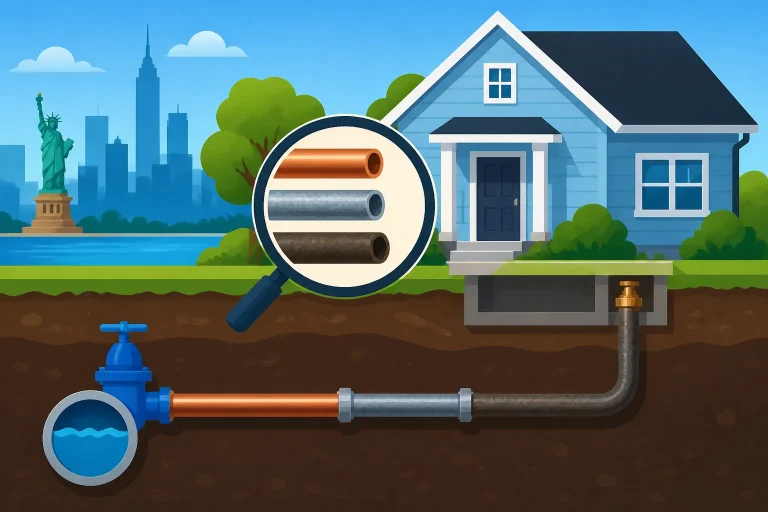
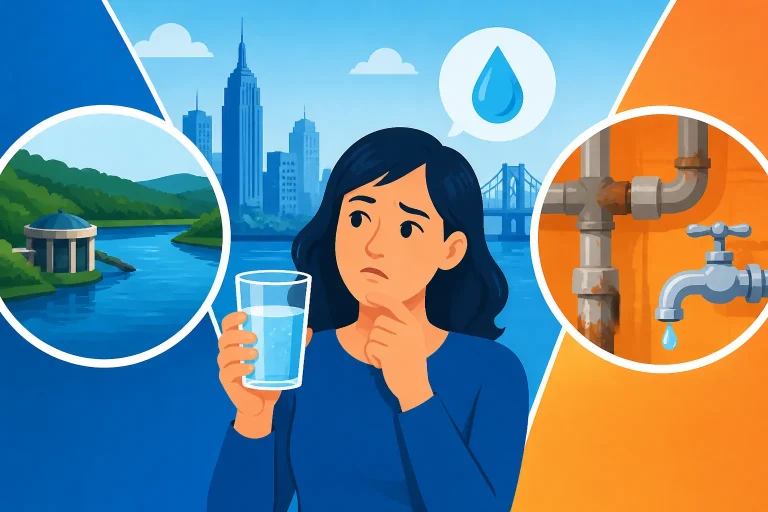
Water can also contact pipes, fixtures and other plumbing on its way from the public system to your glass. The material and condition of a building’s plumbing, and how water has been used or left standing, can affect what a sample at a particular tap shows. That does not mean the building is necessarily the cause of a problem; it means the report and the household sample may describe different points in the water’s journey.
The report may also cover a wider service area than one block or one building. A result summarized for the system does not necessarily establish the result at every individual tap. For more on this boundary, see Kitchen Tap vs. the Utility Report: What a New York Report Can’t Show.
What the report can tell you, and what it cannot
A report is a useful place to start because it can put a household concern in context. It can show what the supplier reports about its water source, treatment and contaminant monitoring. It can also disclose violations, if any are reported. It is still important to read the details rather than treating a report as a simple pass-or-fail score for your kitchen faucet.
| Your question | What the report may help answer | What it may not answer |
|---|---|---|
| Where does the public system’s water come from? | The system’s reported source | Whether a sample from your own faucet has the same characteristics |
| What treatment is provided? | The treatment described for the system | Whether a household plumbing issue is affecting water at a fixture |
| What contaminant results were reported? | Results included in the system’s report | The result for a specific home or tap unless that sample is represented |
| Were any violations reported? | Whether the report identifies a violation | Whether a particular tap has a separate, local issue |
| Can I use the report to decide whether my tap needs testing? | It can help you frame questions for the supplier | It does not, on its own, establish a test result for your household |
The table is a way to separate system questions from tap-specific questions, not a substitute for reading the report. The reported results, sampling details and explanations matter. To make sense of the report’s result columns, see How to Read the Result Columns in a New York Water Quality Report.
A report is not a complete history of every tap
A water quality report does not necessarily contain a sample from every home. It may summarize system monitoring without identifying your building as a sampling location. Even if results are reassuring for the system, that does not prove what is present at a particular tap.
Likewise, a result in the report should not be assumed to describe every water issue a household might notice. A sudden taste, odor or color change could relate to plumbing or other local conditions, and a report may not be designed to diagnose that change. The report can give you context for a conversation with the supplier, but it cannot by itself identify the cause of a household-specific symptom.
The report’s wording also matters. A reported detection, a violation and a household test result are not interchangeable terms. A detection means a result was reported; it does not automatically mean a violation occurred. A violation has a specific regulatory meaning in the report. For help distinguishing a result from a violation, see Violation or Just a Detection? Comparing a Result to New York’s MCLs.
“No violation” is not the same as “tested at my tap”
A report that lists no violations is useful information about the public system’s reported compliance. It does not mean that your kitchen tap was tested, nor does it rule out an issue that is limited to your building’s plumbing.
This is not a reason to dismiss an annual report. It is a reason to use it for the question it can answer. If your concern is about the supplier’s system, the report is a sensible starting point. If your concern is about water collected from your faucet, ask about a tap-specific test or an appropriate household sample.
For more background on what a report is required to include, see What a New York Annual Water Quality Report Is Required to Include. If the report looks reassuring but your water still seems different, Annual Report Looks Fine but the Tap Seems Off: Who to Ask in New York can help you sort out who to contact.
How to find the right report and ask about a tap test
Start by identifying the public water supplier that serves your address. Use the supplier name on your water bill when possible. If you do not have a bill, are new to the property or are unsure whether the supplier name identifies the system that serves your exact address, ask the supplier or your local health department to confirm.
The New York State Department of Health’s Know Your NY Water tool lets users find and map a nearby large public water system and view its Annual Drinking Water Quality Report. It can be a helpful way to locate a report, but treat the map as a starting point: confirm with the supplier that the system shown serves your address. The tool is described as covering large public water systems, so it may not resolve every address or every smaller-system question.
If you need help finding a report, Your Supplier’s Yearly Water Report: A New York Reader’s Guide explains where to look and how to use the document. For a smaller system or a report that is hard to locate, Water Report Not Online? Ask Your New York Local Health Department covers another practical route.
Ask a specific question, not just for “the test”
When contacting the supplier, explain what you are trying to find out. For example, you might ask whether the annual report includes a sample from your building, whether the supplier offers or coordinates household tap testing, and what kind of sample would answer your concern. A broad request for “the water test” can lead to confusion because different tests may cover different substances and sampling points.
Useful questions include:
- Does the annual report include results from a sample collected at my address or building?
- If it does not, can I request a tap-specific result or testing information?
- Which laboratory or testing service should I use for the concern I have?
- Does the sample need to be collected in a particular way?
- Should I contact the supplier, the local health department or another testing provider?
- If I am a renter, should the property owner or building manager be involved?
New York State Department of Health guidance says to request specific results from the supplier and to contact the supplier using the information on your water bill, or your local health department, about testing your tap. The state guidance reviewed here doesn’t specify a single home-testing procedure. That makes it especially useful to ask who is responsible for arranging the test, which sample collection instructions apply and how the result will be interpreted.
If your concern is a particular contaminant, be precise about it. A general water test may not include every substance you are concerned about. Ask the testing provider whether the test covers that specific contaminant and whether the laboratory is suitable for the type of sample you need. For concerns about lead in a building, How New York Renters Can Get a Building’s Tap Water Tested for Lead offers renter-focused next steps, and Testing Tap Water for Lead and Copper Through a Certified New York Lab discusses testing options.
If your home uses a private well
A public-system annual report is not a report on an individual private well. If your home is supplied by a private well rather than a public system, you need to approach the question as a well-testing issue. The supplier report for a nearby public system would not describe your well water.
In that case, see Testing a Private Well in New York: The State’s Recommended Checks for a starting point. If you are unsure whether the home is on public water or a private well, confirm the water source before relying on a report or arranging a test.
What to do when the report and your tap seem to disagree
Sometimes the report appears reassuring, but a household still notices an unusual taste, odor, color or other change. That mismatch does not prove the report is wrong, and it does not prove the home’s plumbing is responsible. It means the broad system report and your particular observation may be addressing different things.
First, decide whether the concern is widespread or limited to your property. Ask nearby residents whether they have noticed the same change, while keeping in mind that different buildings and plumbing can produce different experiences. If neighbors report a similar change, contact the supplier and describe what you are noticing. If it appears limited to one fixture or building, the supplier may still be an appropriate first contact, but a building plumber or property manager may also need to investigate plumbing conditions.
A sudden change is different from a longstanding preference about taste. If the water has changed abruptly, is discolored or has an unusual odor, don’t assume the annual report can explain it. Contact the supplier and ask whether there is a known system issue or current notice affecting your area. For help tracing a change that may be in the building rather than the supply, see Supply or Plumbing? Tracing a Sudden Taste Change in New York Water and Neighbors Taste It Too? When to Call Your New York Water Supplier.
If the supplier says there is no system issue but the concern continues, ask what additional information would help distinguish a supply issue from a household plumbing issue. A test can be useful only when it is matched to the question. The sample location, collection method and substances included all affect what the result can tell you. Keep the report, any supplier responses and laboratory results together so the person helping you can see what has already been checked.
Be clear about what a sample can establish
A household sample is a snapshot from the place and conditions under which it was collected. It does not necessarily describe every tap in a multi-unit building or every way water is used. If a specific tap is your concern, ask whether the sample should be taken from that faucet and whether the testing instructions distinguish between different collection conditions.
Do not choose a treatment device based only on a broad annual report or a general claim about water quality. First identify the issue you want to address and obtain a relevant test result when appropriate. Then compare that result with the exact contaminant the product is designed and certified to reduce. A test that does not measure the substance of concern cannot establish whether a treatment system is suitable.
If you are trying to understand a specific contaminant result, Reading Water Test Results in New York: Detections, Limits, Violations can help with the terminology. If your concern is choosing a treatment option after testing, Choosing a Home Water Filter in New York: Start With Your Test Results explains why the result should come before the purchase.
Keep the report in perspective
The annual report and a household test are complementary tools. The report provides system-level information and may help you understand the public supply. A tap-specific test can address a question about a particular home, building or fixture when it is designed and collected for that purpose.
The practical sequence is straightforward: identify your supplier, find the system’s report, read the results in context, and ask the supplier or local health department about a tap-specific concern. If you use a private well, pursue well testing rather than relying on a public system’s annual report. This approach avoids treating a system summary as though it were a household test, while still making use of the information the report does provide.
Frequently Asked Questions
Does a New York water quality report test my kitchen tap?
Not necessarily. According to the New York State Department of Health, the annual report describes the system’s water, including its source, treatment, contaminant results and violations. It is not necessarily a test of water collected at a particular home’s tap.
How can I find the report for my address?
Check the supplier named on your water bill and ask it to confirm that it serves your address. The New York State Department of Health’s Know Your NY Water tool can help users find and map a nearby large public water system and view its Annual Drinking Water Quality Report. Confirm the serving system with the supplier if the map is unclear.
Who should I contact to ask about testing my tap?
New York State Department of Health guidance says to contact your water supplier using the information on your water bill, or your local health department. Ask what testing is available and how a sample should be collected.
If the report lists no violations, can I assume my tap has no issue?
No. A report can describe the public system without testing your particular tap. If you have a household-specific concern, ask the supplier or local health department about an appropriate tap test.
Sources
- New York State Department of Health — Drinking Water Program: Facts and Figures (checked November 13, 2026)
- New York State Department of Health — New York’s Public Water Systems (checked November 13, 2026)
- New York State Department of Health — Drinking Water Protection Program (checked November 13, 2026)
Disclaimer
This article is for general informational purposes only and does not constitute professional advice. Laws, prices and regulations vary by location and change over time. Consult a qualified professional for guidance on your specific situation. New York Water Guide is not a government agency or water utility and is not affiliated with any public water system.