How New York Water Systems Tell Residents About a Water Problem
A water notice can arrive when you are busy, read differently from an annual report, or seem to leave a key question unanswered: does it apply to your home, and what should you do now? Understanding who sends these messages, what they can tell you, and how to verify the details can help you respond without guessing.
What a water notice tells you and what it does not
Public water systems communicate about water quality in more than one way. An annual water quality report is a regular summary; a notice or advisory is a message about a particular issue or situation. They serve different purposes, so finding information in one does not necessarily answer the questions raised by the other.
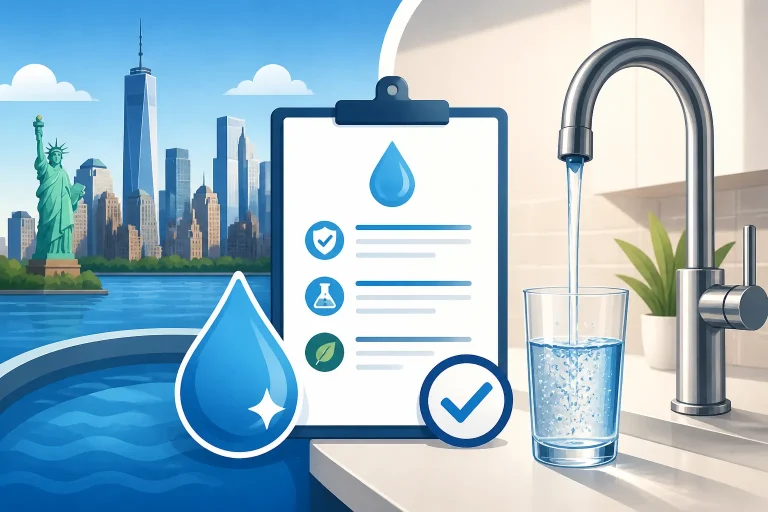
According to the New York State Department of Health, public water systems must issue annual water quality reports and notify consumers when state or federal drinking water standards have been violated. The reports are useful for understanding the system’s water quality information over time. A notice is more likely to address a specific problem, explain which customers may be affected, and provide instructions or a way to get updates.
| Communication | What it is for | What to check |
|---|---|---|
| Annual water quality report | Summarizes water quality information for the system | Reporting period, results, explanations, and any listed violations |
| Problem notice or advisory | Communicates about a particular water issue or precaution | Affected area, problem described, instructions, and how updates will be shared |
| Supplier update | Provides follow-up information as a situation changes | Whether the update replaces earlier instructions or adds to them |
A notice is not the same thing as a complete laboratory report. It may summarize an issue rather than include technical sampling details, and it may not explain every possible cause. If you need context about annual reporting, see Your Supplier’s Yearly Water Report: A New York Reader’s Guide. For help interpreting standards and report terminology, Drinking Water Standards in New York and What They Mean at the Tap may be useful.
A message about a water problem also does not automatically mean that every customer faces the same conditions or needs to take the same action. The instructions may apply to a defined service area, particular locations, or specified uses of water. Read the notice itself rather than relying on a neighbor’s interpretation, a social post, or an old message forwarded without its date and follow-up.
MCLs, or maximum contaminant levels, are drinking water standards. According to the New York State Department of Health, MCLs require public water systems to monitor regularly, notify health departments and the public of confirmed exceedances, and work with health departments on a timetable and plan to bring water systems into compliance. An exceedance is an important regulatory finding, but the notice and health department guidance are the places to look for what residents should do in the specific situation.
The New York State Department of Environmental Conservation also says water systems must notify their local health department of any exceedances. That obligation is one part of the process; it does not mean that an individual resident should have to infer the meaning of a result from a technical record. If a message is unclear, ask the supplier or local health department what it means for your address and household.
Keep the distinction between a confirmed standards exceedance and other kinds of water communications in mind. A supplier might share information about an operational issue, a precaution, a change in taste, or a temporary disruption. The existence of a message alone does not establish that a drinking water standard was violated. Conversely, an annual report that describes past results does not necessarily tell you whether a new issue is occurring now.
For a broader explanation of alerts and advisories, see When New York Tap Water Isn’t Safe to Drink: Notices and Advisories. If you are trying to understand a particular notice rather than the system’s general history, prioritize the latest notice and confirm whether any newer instructions have replaced it.
Where notices come from and how residents can find them
The water supplier is often the first place to check for information about the public water system serving an address. A supplier may communicate with customers through the channels it uses for service updates, and the official supplier website is a practical place to look for current notices and contact details. Do not assume that a message will reach every resident in the same way: renters, building occupants, and people who do not receive a bill directly may need to check the supplier’s public updates or ask the property manager.
A local health department can help clarify the public health meaning of a notice and may provide information for the area it serves. The system’s notice and the health department’s guidance may have different levels of detail. If the two seem inconsistent, ask the supplier or local health department which instructions currently apply and whether one communication has superseded another.
Use an official source to confirm a message before acting on an unattributed screenshot or forwarded text. Check that the message identifies the supplier or issuing authority, describes the affected area, and appears on an official communication channel. If you cannot find it online, contact the supplier using details from its official website. Do not rely on a phone number or link included in a message you are unsure about.
Notices can be missed for ordinary reasons: an account may be in someone else’s name, an email address may be outdated, a tenant may not see a landlord’s mail, or a resident may not be signed up for supplier alerts. If you learn about a possible problem from someone else, verify it directly rather than assuming it is either false or applicable to your home.
To check whether a message covers your address:
- Identify the water supplier for the property. The supplier named on a water bill is a useful starting point, but confirm if you are unsure.
- Find the latest notice on the supplier’s official website or other official communication channel.
- Compare the affected area named in the notice with your address, street, building, or service zone.
- Check whether the message includes a boundary description or directs residents to confirm coverage.
- If the boundary is unclear, ask the supplier or local health department directly.
A nearby street may receive water from a different system, and a large building can have a manager who relays supplier information to residents. Do not use a neighbor’s notice as proof that your own property is covered or excluded. For help identifying the supplier, see Finding Your New York Water Supplier and Whether It Adds Fluoride or Moving In? Find the Supplier and Water Report for a New York Address.
To reduce the chance of missing future communications, ask the supplier how residents can sign up for alerts and make sure the account’s contact information is current. If you rent, ask the landlord or building manager how urgent water notices are shared with tenants. Signing Up for Water Alerts From Your New York Supplier covers ways to make supplier updates easier to find.
If you think a notice may have been missed, check both the supplier’s official updates and the local health department’s information. Missed a Water Notice? Where New York Residents Can Check for Updates offers more detail on checking for current notices.
How to read a notice without overlooking the important parts
Start with the date and status of the message. Is it an initial notice, a follow-up, or an update saying that instructions have changed? A later message may clarify the earlier one, but do not assume that it cancels previous directions unless it says so. If the notice does not make its status clear, ask the supplier or health department.
Next, identify exactly where the notice applies. Look for the named system, service area, streets, neighborhoods, buildings, or other boundary description. If your address is close to a boundary, do not decide based only on distance. Ask the supplier to confirm whether your home is included.
Then look for the problem described. A notice might identify a confirmed standards exceedance, explain a precaution, or describe another water-system concern. The wording matters: a test result, a suspected issue, and a confirmed exceedance are not interchangeable. If technical terms or results are unfamiliar, ask the issuing authority to explain them in relation to the notice and its instructions.
Pay close attention to the recommended actions. Separate instructions about drinking from instructions about cooking, preparing beverages, making ice, or other household uses. Do not expand or narrow the instructions based on assumptions about what seems safest. Follow the directions given for the affected area, and contact the supplier or health department when an instruction does not address your question.
Also check how the notice says updates will be provided. It may direct residents to a supplier page, a public announcement, or another official channel. Use that route to confirm whether the situation has changed. An old notice shared without its follow-up can give an incomplete picture.
If the notice mentions a drinking water standards violation, remember that the regulatory process includes monitoring, notifications, and work with health departments on a compliance timetable and plan. That process does not replace resident instructions. The notice should be read for what people in the affected area are being asked to do, while the annual report and compliance information can help explain the system’s broader record.
If important details appear to be missing, write down the specific questions before contacting the supplier or health department. Ask:
- Does this notice cover my exact address?
- What water uses are affected, and what directions should residents follow?
- Is this the latest notice, or has a newer update changed the instructions?
- Where will current updates be posted?
- Who should renters or building occupants contact if they do not receive supplier messages?
When a message uses unfamiliar terms, a short explanation from the responsible organization is more reliable than guessing from a headline. For additional help with the meaning of an exceedance notice, see An MCL Exceedance Notice in New York: Is the Water Unsafe to Drink?. For understanding the contents of an annual report, How to Read the Result Columns in a New York Water Quality Report can help separate reported results from the instructions in a current notice.
What to do when the message is unclear, outdated, or missing
If you are unsure whether a notice applies to you, first confirm the supplier and affected area. Use official supplier or health department channels, and ask for an address-specific answer when the notice’s boundaries are not clear. This is especially important if you rent or live in a multi-unit building, where the person who receives supplier mail may not be the person who uses the tap.
If you find conflicting messages, compare their dates and look for language identifying a replacement or update. Avoid choosing the instruction that seems more convenient. Contact the supplier or local health department and ask which direction is current. Keep a copy of the relevant notice or note its date and issuing organization so you can describe exactly what you saw.
If a notice gives clear instructions, follow them for the uses and area it names. Do not assume that a household filter, pitcher, or other treatment device changes an official instruction. A treatment product is designed or certified for particular reductions, and its suitability depends on the issue and the product’s certification. If the notice raises a health question, ask the local health department or a medical professional rather than relying on a product claim or informal advice.
For residents who receive information indirectly, a simple communication plan can prevent confusion. Ask the landlord or building manager where notices will be posted and how urgent updates are relayed. If you are helping a family member or neighbor, share the complete notice and its official source, not just a summary. Encourage them to verify whether their own address is included.
When contacting the supplier, describe the message and ask what it means for your address. If you are contacting the health department, explain what instruction is unclear or what health-related question you need answered. These organizations may be able to clarify different parts of the issue: the supplier can confirm service-area details and system updates, while the health department can address public health guidance.
A notice should not be treated as a substitute for the system’s annual water quality report, and the report should not be treated as a live alert. Read the document that matches your question: use current notices for current instructions, and use annual reports to review the system’s reported water quality information. What a New York Annual Water Quality Report Is Required to Include explains the report’s role, while Your Right to Know What Is in New York Drinking Water provides more background on access to water-quality information.
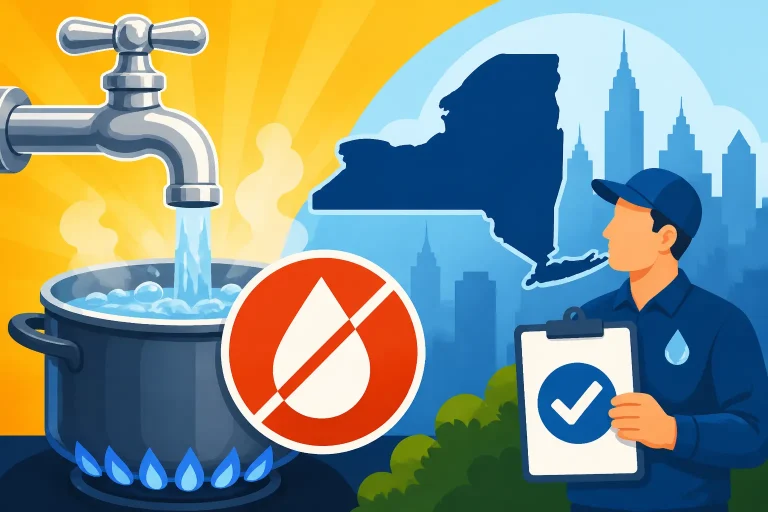
If you do not find a notice online, that alone does not prove there is no issue, just as an unverified post does not prove that there is one. Check the official supplier channel and contact the supplier or local health department for confirmation. For a boil-water notice specifically, What a New York Boil-Water Notice Is Supposed to Tell You explains the kinds of information residents should look for, and Does a New York Boil-Water Notice Cover Your Street? How to Find Out focuses on confirming coverage.
Frequently Asked Questions
Does an annual water quality report tell me about a problem happening now?
Not necessarily. The report is an annual summary, while a current notice addresses a particular issue or precaution. Check the supplier’s latest official updates and ask whether any notice applies to your address.
Does every water notice mean the system violated a drinking water standard?
No. A notice may communicate a precaution or operational concern rather than a confirmed standards exceedance. Read the wording, and ask the supplier or local health department if the status is unclear.
Who should I contact if I do not know whether my address is affected?
Start with the water supplier named on your bill or identified through the supplier’s official service information. If the notice’s boundary is unclear, ask the supplier or local health department to confirm coverage.
What if I rent and do not receive supplier messages?
Ask the landlord or building manager how water notices are shared, and check the supplier’s official updates yourself. You can also ask the supplier how residents can receive alerts directly.
Sources
- New York State Department of Health — New York’s Public Water Systems (checked November 13, 2026)
- New York State Department of Environmental Conservation — Per- and Polyfluoroalkyl Substances (PFAS) – NYSDEC (checked November 13, 2026)
Disclaimer
This article is for general informational purposes only and does not constitute professional advice. Laws, prices and regulations vary by location and change over time. Consult a qualified professional for guidance on your specific situation. New York Water Guide is not a government agency or water utility and is not affiliated with any public water system.