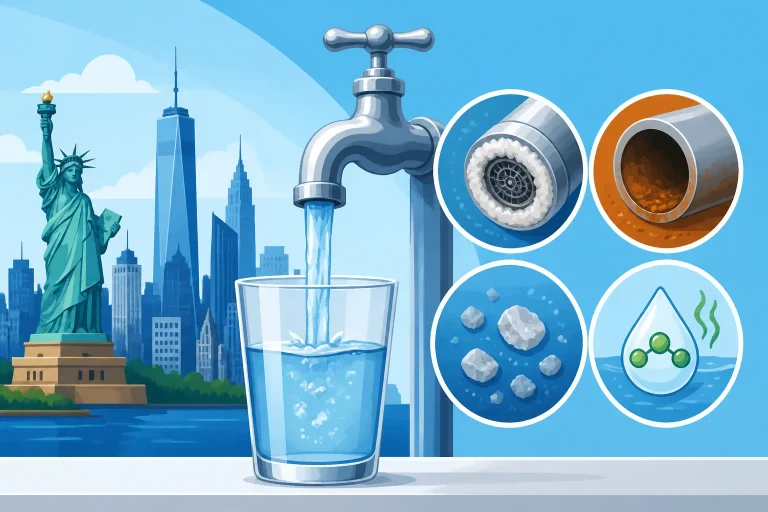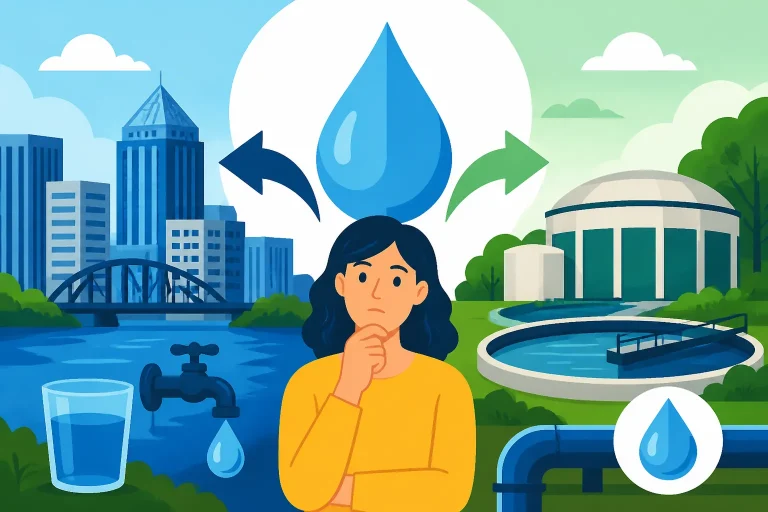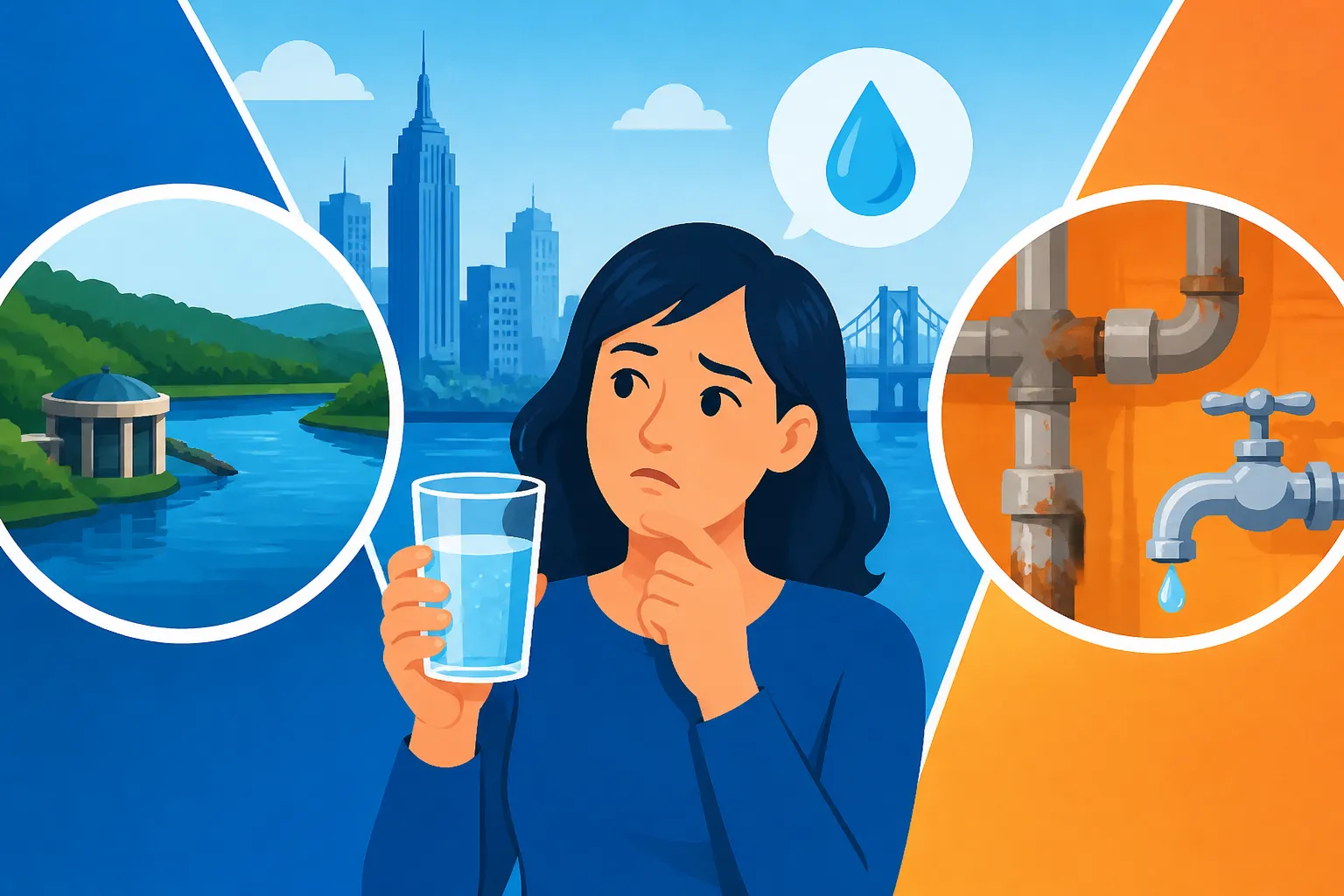
Supply or Plumbing? Tracing a Sudden Taste Change in New York Water
A sudden change in tap-water taste can come from the public supply, work on nearby pipes, or plumbing and equipment inside your building. The taste alone usually cannot identify the cause or show whether water is safe. A few careful checks can help narrow down where the change begins and who to contact next.
First, work out whether the change is local
Notice what changed, when it started, and where you can taste it. A quick comparison between cold taps and nearby households can help distinguish a building-specific issue from a wider supply change. It cannot confirm that water is safe, but it gives you useful information to share with your water supplier or landlord.
Try these checks before changing plumbing or buying treatment equipment:
- Compare cold water at more than one tap. Use taps that are fed by different fixtures if possible, such as the kitchen and bathroom. Let the water run briefly, then compare its taste and smell. If only one tap is affected, the faucet, its aerator, or a local section of plumbing may be involved.
- Compare cold and hot water separately. If the change is present only in hot water, the water heater or hot-water plumbing may be a more likely place to investigate. Avoid using hot tap water for drinking or cooking; heat can increase the amount of some metals picked up from plumbing.
- Ask whether a neighbor has noticed the same thing. Nearby residents on the same supplier may be able to tell you whether they are experiencing a similar change. A difference between neighboring homes does not prove that either home has a plumbing problem, but it helps define the area affected.
- Check whether the change is limited to filtered water. If the unfiltered tap tastes as usual but a pitcher or refrigerator dispenser tastes different, look at the filter’s age, installation, and maintenance instructions. A filter can change taste as it becomes due for replacement, but a taste change is not a reliable test of whether it is working.
- Record the details. Note the start time, affected taps, whether the water is hot or cold, and any unusual odor, color, cloudiness, or particles. A short description is more useful than “the water tastes strange.”
The pattern can point toward a place to investigate, but it is not a definitive diagnosis. For instance, several taps with the same change may indicate a shared building line or incoming supply, while one affected tap may suggest a localized fixture issue. A change across several nearby homes is a good reason to check for supplier updates and contact the supplier directly.
If you are unsure which company or public system serves your address, start with Finding Your New York Water Supplier and Whether It Adds Fluoride. In some areas, a bill may come from an authority or municipality even if the water comes from another system; the supplier that serves the address is the right place to ask about current water conditions.
| What you notice | Where to investigate first | What the pattern does and does not tell you |
|---|---|---|
| One cold tap tastes different | Faucet, aerator, nearby branch plumbing | Suggests a local issue; does not rule out a broader problem |
| Several taps in one home taste different | Building plumbing, treatment equipment, incoming supply | Helps narrow the location, but may require supplier or building checks |
| Hot water tastes different; cold water does not | Water heater or hot-water plumbing | Points toward hot-water equipment, not a confirmed cause |
| Several nearby homes notice the same change | Supplier updates and the public distribution system | Makes a shared supply issue more plausible; contact the supplier to confirm |
| Only filtered water tastes different | Filter, cartridge, dispenser, or maintenance | Indicates the treatment equipment may be involved; taste cannot confirm filter performance |
Check for notices and contact the right person
Before trying to fix the water yourself, check for a current notice from the supplier and confirm that it applies to your address. A supplier may post updates on its official website, send alerts, or use other notification channels. You can also contact the supplier using current contact details from its official website. If you rent, tell the landlord or building manager as well, especially when more than one apartment or a shared building system may be involved.
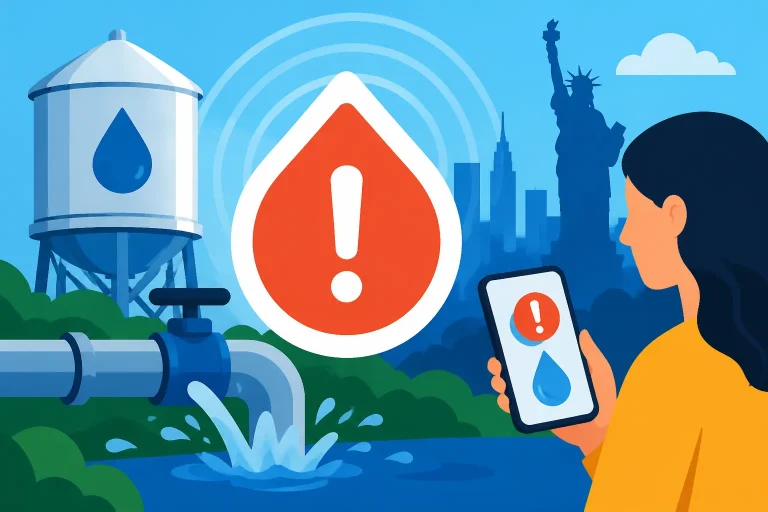
A taste or odor change does not automatically mean there is a safety issue, and water that looks and tastes normal is not necessarily a guarantee of safety. Follow any specific instructions in a current supplier notice. If there is a boil-water notice, a do-not-drink notice, or a do-not-use notice, follow its instructions rather than relying on taste, a household filter, or a general internet search. How New York Water Systems Tell Residents About a Water Problem explains the types of messages suppliers may issue and where residents can check for updates.
When you contact the supplier, describe the change rather than asking them to guess from a vague report. Useful details include:
- Your service address and, if known, the supplier shown on your bill.
- When the change began and whether it is constant or comes and goes.
- Whether the water is cold, hot, or both.
- Which taps are affected and whether neighbors notice it.
- Any color, particles, cloudiness, or unusual odor.
- Recent work at the building, changes to a filter, or a water outage, if known.
Ask whether the supplier is aware of a taste or odor issue in the area, whether work or flushing has occurred, and whether there are current advisories for your address. If the supplier says it has no area-wide issue, that does not prove the cause is inside your home; it just gives you a useful next place to investigate.
In a rental, report the issue in writing to the landlord or property manager and keep a copy. Ask whether other units have reported the same change and whether building work or a water-system repair has taken place. If the concern involves a shared tank, riser, or treatment system, the building manager may need to arrange an inspection. For a New York City apartment, Renting in NYC and the Tap Water Changed? Who to Tell First covers how to sort out building and supplier contacts.
A sudden taste change that affects multiple neighboring homes is worth reporting to the water supplier even if there is no notice online. A reported change can help the supplier determine whether it is limited to one service area, related to a system operation, or not showing up elsewhere. If the issue involves possible health effects, seek guidance from the local health department or a medical professional rather than trying to assess it by taste.
Common supply-side and plumbing causes
Taste is subjective, and similar descriptions can have different causes. People may describe water as bitter, metallic, earthy, musty, salty, or chemical-like, but those words do not identify a contaminant. They are clues to describe the problem, not a substitute for testing or supplier guidance.
Changes in the public supply
Municipal water can vary in taste over time. A supplier may use a different source or adjust treatment operations, and source water conditions can change. Some people notice a stronger chlorine-like taste or smell at particular times. An earthy or musty taste may also prompt questions about source conditions or treatment. Neither observation, by itself, establishes that the water is unsafe.
Suppliers treat public water and monitor it under applicable requirements, but a yearly report is not a real-time update about every taste change. The report summarizes specified monitoring and other information for a reporting period; it may not explain a new change at your kitchen tap. For context, see Your Supplier’s Yearly Water Report: A New York Reader’s Guide and Does a New York Water Quality Report Describe Your Own Kitchen Tap?.
A change in what you notice may also reflect the way water reaches your home. Water can travel through a distribution system before entering a building, and conditions may vary by location. If several homes in the same area notice a change, ask the supplier whether it has information about the source, treatment, or distribution system.
Work on mains and distribution pipes
Water-main repairs, hydrant use, or other system work can sometimes be followed by temporary changes in appearance or taste. The details depend on the location and work involved, so do not assume that a sudden change is harmless just because construction is nearby. Check with the supplier to find out whether work occurred and whether residents need to take any particular action.
If the water turns brown, rusty, or cloudy, or contains visible particles, treat that as a separate observation worth reporting. Avoid using water that is discolored for drinking or cooking until you have checked current supplier instructions. A supplier can advise whether the issue is known, what steps residents should take, and whether it is appropriate to run cold water. Do not assume that flushing will resolve every problem, especially if a notice says not to use the water or gives different directions. Brown Tap Water in NYC After Hydrant Use or a Main Repair discusses one possible situation in New York City; the supplier’s instructions for your address take priority.
Plumbing inside a home or building
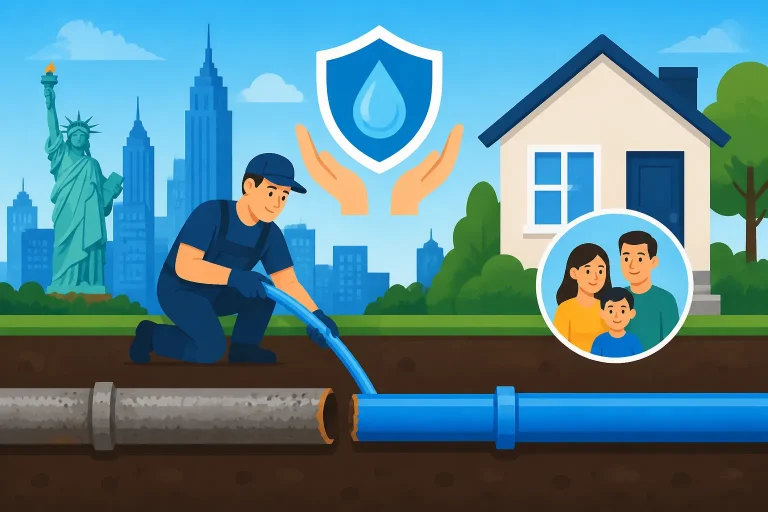
A sudden change can originate after water enters the property. Older or corroded plumbing, a repair, a long period without use, or work on a building water system can affect what comes from a tap. A fixture’s aerator may trap sediment, and a water heater may affect hot water. A landlord or plumber can help inspect building components when the pattern points to the property.
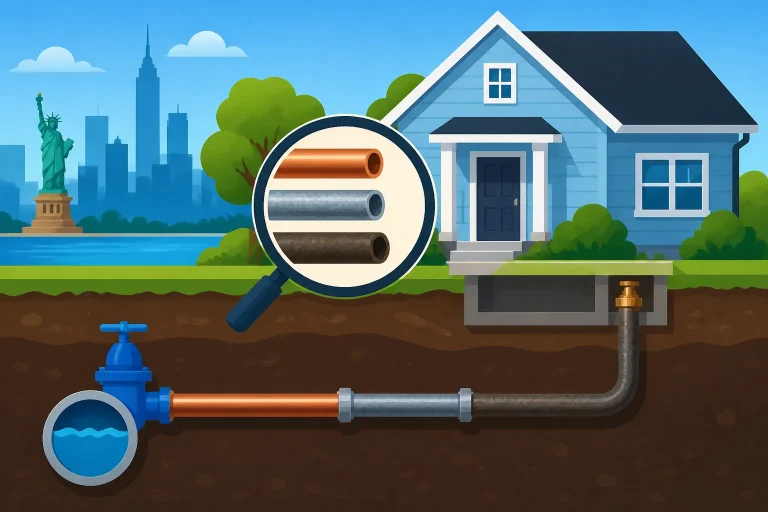
Taste does not reveal whether lead is present. Lead can enter water from service lines or plumbing, and it cannot be reliably detected by taste, smell, or color. If lead is a concern, use appropriate records and testing rather than relying on sensory clues. Lead Pipes Between the Main and Your Home: A New York Guide explains the possible route from the main to the home, while How to Look Up Your Home’s Service Line Material in New York covers records that may help identify the line material.
If the water changes only after passing through a treatment device, check the manufacturer’s instructions for cartridge replacement, cleaning, and installation. A poorly maintained or incorrectly installed system can affect taste, but the taste itself cannot show whether a cartridge is reducing the substances it is designed to reduce. Match any treatment choice to reliable test results and the device’s certification for the specific reduction claim. Choosing a Home Water Filter in New York: Start With Your Test Results explains why diagnosis should come before buying a filter.
Odor or taste limited to hot water
When cold water tastes normal but hot water has a metallic, sulfur-like, or otherwise unusual odor or taste, the water heater and hot-water plumbing deserve attention. The difference does not prove the water heater is responsible, but it gives a plumber or building manager a useful starting point. Avoid adjusting or draining equipment unless you know how to do so safely and in line with its instructions.
If the change appears in both hot and cold water throughout the building, contact the supplier and building manager rather than treating the water heater as the only possibility. For a more detailed distinction between a hot-water odor and a possible well-water issue, see Rotten-Egg Smell Only in Hot Water? Heater Fix or Reason to Test.
A step-by-step way to narrow it down
Work from simple observations to professional follow-up. Avoid repeatedly tasting water that has an unusual odor or appearance, and do not try to identify a contaminant by comparing it with online descriptions.
- Pause before consuming water that looks or smells unusual. If there is a current notice, follow its exact instructions. If there is no notice but the water has a sudden, strong, or persistent change, contact the supplier for guidance before using it for drinking or cooking.
- Compare cold water at multiple taps. Note whether the change is limited to one fixture or appears throughout the home. Do not assume that every tap in a building has identical plumbing.
- Compare hot and cold water. Record whether the issue occurs only in hot water. This can help separate the hot-water system from the incoming cold-water supply.
- Ask a nearby neighbor. Check whether the neighbor is served by the same supplier if you can. A similar change nearby is useful to report but does not confirm a cause.
- Check the supplier’s current notices. Use the official supplier website or other official alert channel. Confirm the service area, affected streets, and any actions requested.
- Tell the supplier what you observed. Ask whether there is a known operational issue, local work, or water-quality advisory, and ask what residents should do. Keep a note of the response.
- Contact the landlord or building manager if you rent or share building plumbing. Include the affected taps and units, if known, and ask whether recent work or a building-system issue could be relevant.
- Consider testing only when it fits the question. If a persistent concern points to plumbing, a specific contaminant, or a private well, ask the supplier, local health department, or a qualified water professional what test is appropriate. A general taste complaint does not automatically call for a broad test panel.
Testing is most useful when it is designed to answer a specific question. A laboratory sample can help evaluate certain substances, but the sample location, collection method, and timing matter. A test from a building’s tap may not answer the same question as a test from the supplier’s treatment plant or distribution system. If you need to investigate lead, for example, the relevant sampling approach differs from testing for bacteria or a taste-related nuisance. Testing Home Water in New York: A Contaminant-by-Contaminant Guide provides a starting point for matching the concern to an appropriate test.
If you use a private well rather than public water, the supplier-side checks do not apply in the same way. A sudden change in a well can warrant testing and inspection, particularly after flooding, repairs, or changes in water flow. Do not select treatment solely from taste or odor; first identify the issue with suitable testing. See Well Water Looks, Smells or Tastes Different? Test Before You Treat for steps specific to private wells.
What to avoid while you investigate
- Do not assume boiling will fix an unknown taste. Boiling is not a general-purpose treatment and does not remove many chemicals or metals. Use it only when an official notice instructs you to boil water for a specific purpose. See Boiling Does Not Remove Chemicals From Water: New York’s Guidance.
- Do not assume a pitcher filter makes water safe during an advisory. Follow the advisory and supplier instructions. Filters vary, and a taste improvement does not prove the water is suitable for every use.
- Do not buy a treatment system based only on a sales test or taste description. First identify the likely issue and check whether the system is certified for the particular reduction you need.
- Do not use a yearly water report as the only answer to a new taste change. It can provide background, but a current supplier response is more relevant to a sudden local change.
- Do not ignore a change because it is intermittent. A problem that comes and goes is still worth describing, especially if it coincides with building work, a water outage, or a change noticed by neighbors.
When the change persists
If the supplier does not identify a system-wide issue and the taste change continues, follow up based on the pattern. For one affected faucet, ask a plumber or building maintenance professional to inspect the fixture and local plumbing. For hot water only, ask about the water heater and hot-water lines. If several units in a building are affected, the property manager should coordinate checks of shared pipes or equipment.
For a whole-house change, contact the supplier again with updated information. Tell them whether it is stronger, weaker, limited to certain times, or now affecting more locations. If the supplier recommends sampling or a local inspection, ask what question the test is intended to answer and where the sample should be collected. A test result is most useful when it is interpreted alongside the sampling method and the plumbing or supply conditions at the time.
If the taste change accompanies a possible health concern, visible contamination, or a notice, do not try to decide safety from the taste. Follow the official notice and ask the local health department or a medical professional about health-related questions. For a suspected problem with a public system, the supplier is the appropriate first contact for current operational information. For plumbing inside a rental or shared building, contact the property manager as well.
The practical goal is not to name the cause from a sip. It is to describe the change accurately, establish whether it is limited to one fixture or shared across homes, and get guidance from the party responsible for the part of the system where it may be occurring. That approach avoids unnecessary treatment purchases while making it less likely that a real supply or building issue goes unreported.
Frequently Asked Questions
Can I tell from the taste whether New York tap water is safe?
No. Taste and odor can help describe a change, but they cannot identify contaminants or reliably establish safety. Check current supplier notices and contact the supplier about an unexpected change.
What if the water tastes different at only one faucet?
A single affected faucet may point to the fixture, aerator, or nearby plumbing, but it is not proof of the cause. Compare other cold taps and contact building maintenance or a plumber if the change continues.
Should I run the tap until the taste goes away?
Do not treat flushing as a universal fix. Follow any notice or supplier instructions, and ask the supplier whether running cold water is appropriate for the issue at your address.
Will a filter solve a sudden taste change?
Not necessarily. Filters are designed to reduce particular substances, and a taste change does not identify what needs treatment. Check the water information or test results first, then confirm that any chosen device is certified for the specific reduction.
Disclaimer
This article is for general informational purposes only and does not constitute professional advice. Laws, prices and regulations vary by location and change over time. Consult a qualified professional for guidance on your specific situation. New York Water Guide is not a government agency or water utility and is not affiliated with any public water system.